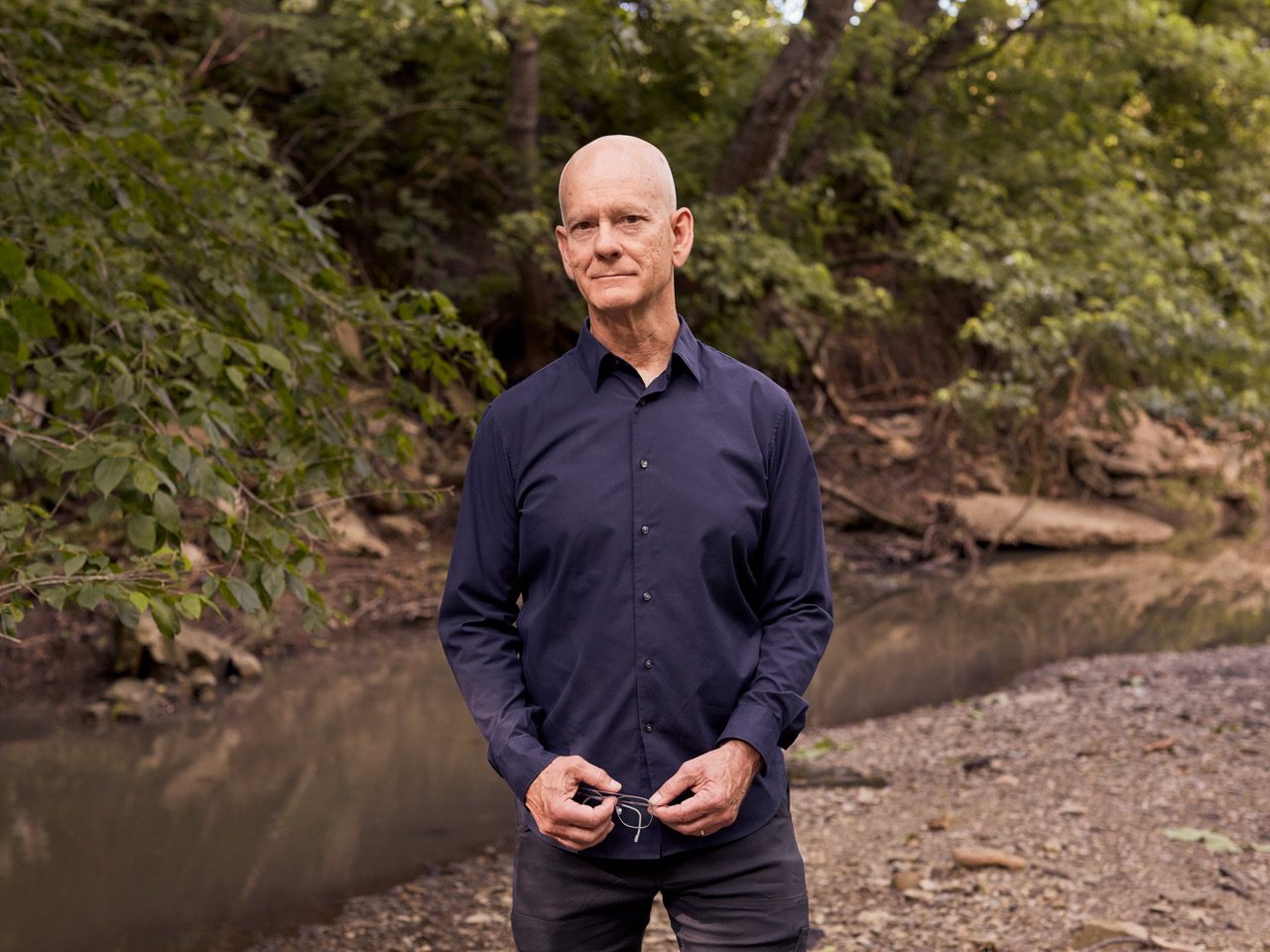
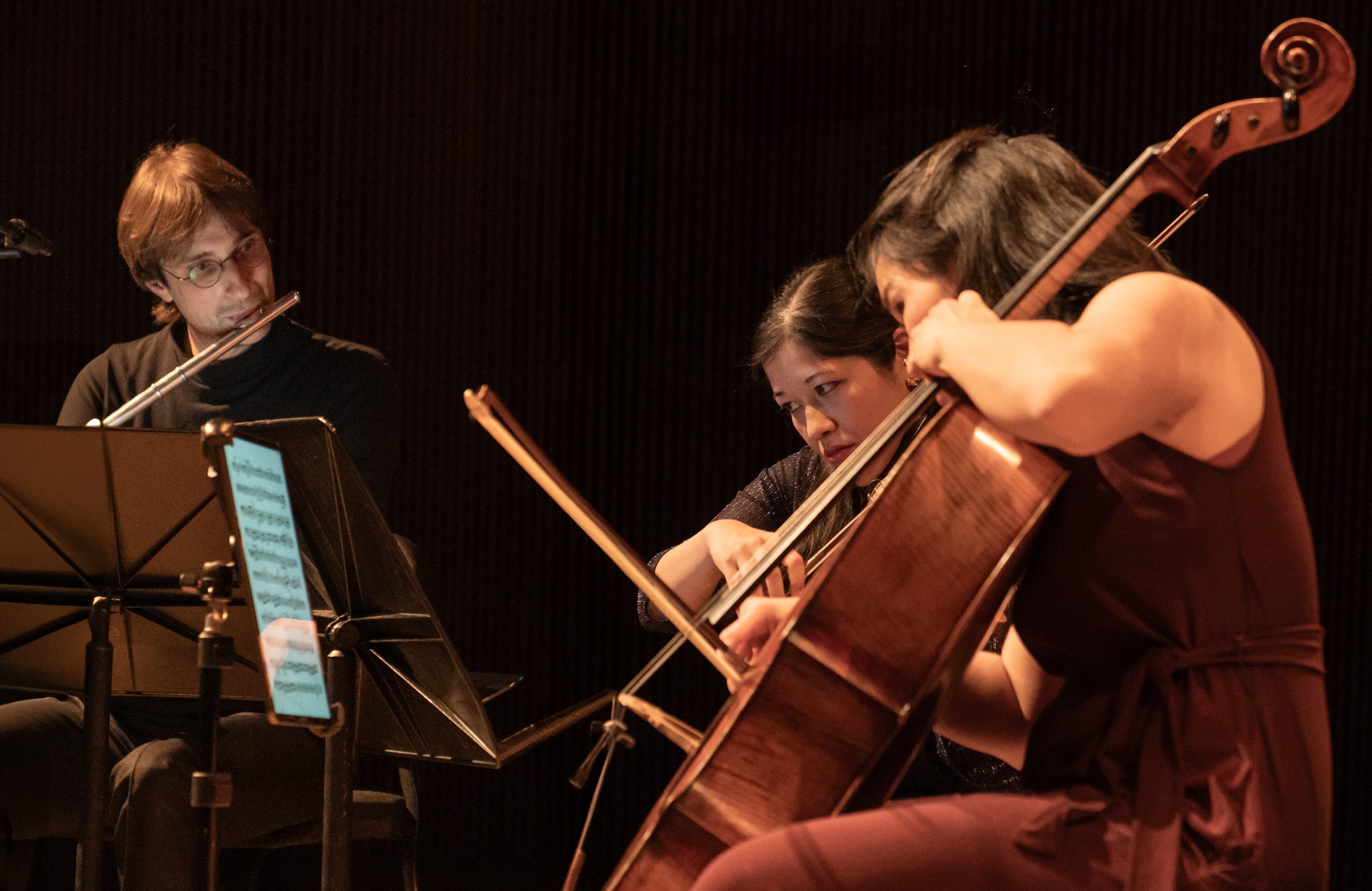
We have interviewed the composer Eric Moe because on 30 October we play his Laminar Flow in Upsidedown Creek at The DiMenna Center for Classical Music, in Currents, the first night of our twelfth season. The piece reached the programme through our open Call for Scores, and it sits that evening between Brahms and both Schumanns. Moe is a Guggenheim fellow, honoured by the American Academy of Arts and Letters, and co-directs Music on the Edge in Pittsburgh, which means he reads scores from the other side of the desk as well. Four weeks before the concert, we sent him eight questions.
Where did the title Laminar Flow in Upsidedown Creek come from?
"Laminar flow" is a term used to describe a fluid moving smoothly without eddies or turbulence. Upsidedown Creek is a short steep stream that dives off the Lake Plateau in the Beartooth Mountains of Montana into the Boulder River. (A hiking trail that ascends along the stream has a famous inverted sign at the trailhead). I admit that there's not a lot of laminar flow in the actual Upsidedown Creek - I've been up and down the trail more than once - but my piece has a lot of quietly syncopated, gently flowing music with melodies that often turn upside down while re-examining themselves.
What was the initial idea or image behind the piece?
The visual idea of the piece came from looking at mountain streams and taking delight in the places where water sheets transparently over rocks and streambed. The kinetic idea of the piece came from performing and listening to suave tango-inspired compositions by Pablo Ortiz; a tango with three dancers.
What does "flow" mean to you musically?
"Flow" suggests more or less continual, more or less gentle rhythmic movement to me; a flow state is something I seek when writing music.
Is there something in the piece you would especially like listeners to notice or listen for?
It's not essential to the enjoyment of the piece, but there's a place near the end of the piece that I think is pretty cool. In the piece up to that point, there are essentially two melodic lines that the instruments take turns expressing. These two streams that have been flowing side by side - the soprano and bass lines - are finally joined by a third in a gentle apotheosis.
How does nature, science, or the physical world influence the way you think about music?
As the title suggests, I'm a nature-lover and a science-lover as well as a music-, art-, and literature-lover. I look to experience the sublime wherever I can find it in all its various forms and flavors.
What are some recent or upcoming projects you're particularly excited about and would like to share?
My song cycle Girl Soup, a setting of surreal feminist poems by the poet Sawako Nakayasu, will be premiered on December 6 in New York by soprano Anna Elder and pianist Huizi Zhang (details forthcoming). A portrait CD, No Time Like The Present, including my new piano concerto has just been released by bmop/sound.
What are you most curious to hear in CreArtBox's interpretation of the piece?
I'm very excited to hear what will be (as far as I know) only the second performance of the trio. The piece provides an intimate experience for the performers, who are (to an unusual degree) completing or echoing one another's musical thoughts throughout. Additionally, I'm curious to hear Laminar Flow in the context of pieces I have loved and studied for many years (Schumann, Brahms).
You co-direct Music on the Edge and have been programming new music in Pittsburgh for years. From the other side of the desk: what makes you say yes to a score you have never heard of?
In considering new work for programming, in addition to pieces with engaging, unsurprising qualities - rhythmic interest (unrelated to tempo, btw), fresh musical ideas, dramatic pacing - I admire and favor pieces that will provide a rewarding experience for the performer. This doesn't mean that the piece has to be easy or even idiomatically written for the instruments - after all, overcoming challenges is part of the joy of musicmaking. But if the performers are excited about the piece, then listeners are bound to be excited as well.